

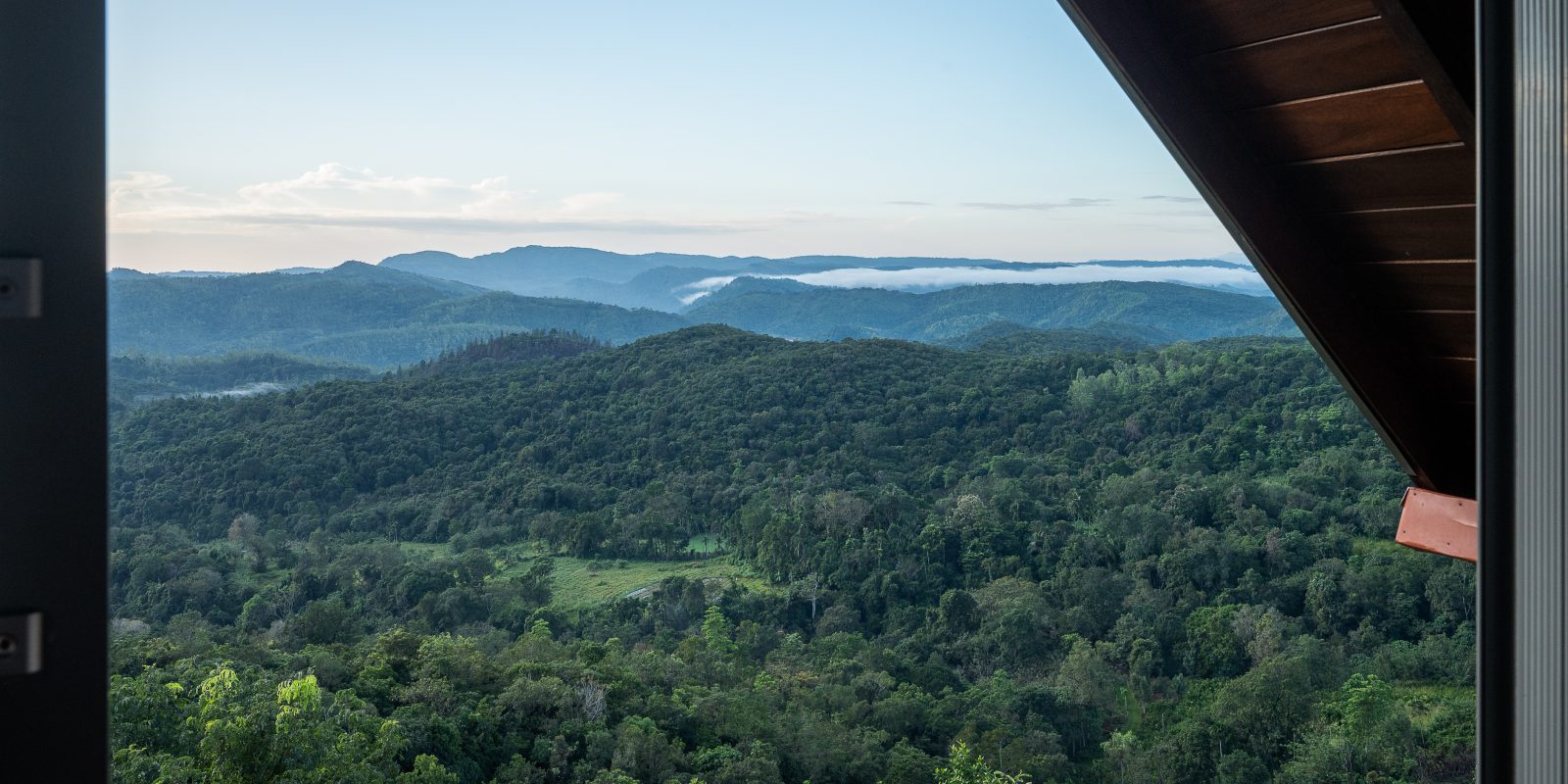
Belihuloya is often described through its mountains, waterfalls, misty mornings and quiet roads. But beneath that familiar landscape is something far more significant. Belihuloya sits within a biogeographical transition zone in south-central Sri Lanka, bringing together different habitats and ecological conditions within a relatively small area.
This makes it an interesting place not only for travellers, but also for anyone interested in biodiversity.
A 2019 study examining bird diversity across different land-use types in Belihuloya recorded 2,142 observations representing 106 bird species across 44 families. Of these, 11 species were endemic to Sri Lanka, eight were threatened species and 11 were winter visitors. The study looked at home gardens, paddy fields, secondary forest patches and Pinus plantations, demonstrating that biodiversity in Belihuloya is not confined to one type of landscape.
That is one of the most interesting things about Belihuloya.
Wildlife here does not exist in isolation.
It is woven into a landscape made up of forests, streams, agricultural land, gardens, tea estates and the spaces between them. Different habitats support different species, and together they form an ecological mosaic that allows wildlife to move, feed, breed and survive.
The result is a place where biodiversity can reveal itself in small and unexpected ways. You may notice a bird moving through the canopy before you hear it. A dragonfly may appear beside a stream. A butterfly may settle briefly on a leaf. At night, a completely different collection of species begins to emerge.
The more closely you look, the more complicated the landscape becomes.
A Landscape Shaped by Transition
Belihuloya’s position between different ecological regions is part of what makes the area so interesting.
As you move through the landscape, the scenery changes constantly. Dense vegetation gives way to open areas. Forest edges meet agricultural land. Streams cut through the landscape, while mountain slopes rise towards the higher elevations of the Central Highlands.
For a visitor, these changes may simply look beautiful.
For wildlife, they create different opportunities.
Birds may move between forest patches and gardens in search of food. Dragonflies depend on freshwater habitats. Butterflies move through flowering vegetation and forest edges. Amphibians rely on streams and moist environments. Larger animals use forested areas and connected habitats as they move through the landscape.
The result is a place where biodiversity can reveal itself in small and unexpected ways.
Why Habitat Diversity Matters
The Belihuloya bird study found that different land-use types supported different bird communities. Secondary forest patches, in particular, showed high diversity, reinforcing the importance of retaining natural vegetation within landscapes that are also used for agriculture and human settlement.
This is an important reminder that conservation does not always happen inside the boundaries of a national park.
Small forest patches, streams, gardens, agricultural areas and other semi-natural habitats can all contribute to the wider ecological network.
But these landscapes are also vulnerable.
Habitat fragmentation, land clearance, environmental pollution, excessive use of fertilisers and forest fires can all affect the ability of species to survive and move between habitats. When natural areas become increasingly isolated, the landscape becomes harder for wildlife to navigate.
This is why understanding places like Belihuloya matters.
Before something can be protected, it needs to be understood.
Looking Beyond the Obvious
When people think about wildlife tourism in Sri Lanka, the conversation often begins with elephants, leopards and national parks.
Belihuloya offers a different perspective.
Here, wildlife can be found in the details.
The bird calling from a tree above your breakfast table. The butterfly moving between flowers. The dragonfly hovering over a stream. The frog calling after sunset. The movement in the forest that you notice only because you stopped walking and listened.
It is a slower way of experiencing wildlife.
And perhaps that is what makes it so rewarding.
At Treehouse Chalets, resident naturalist-led bird walks and jungle hikes are designed to help guests look more closely at the landscape. Rather than simply moving through the forest, guests can begin to understand what they are seeing, from birds and insects to plants and the wider relationships between species.
The experience changes when someone can tell you why a particular bird is there, what a plant is used for, or why a stream matters to the ecosystem.
You stop simply seeing nature.
You begin to read it.
Belihuloya as a Living Landscape
The biodiversity of Belihuloya is not something that exists only in scientific papers or species lists.
It is visible in the landscape itself.
The 106 bird species recorded in one study are part of a much wider ecological picture. Research into Belihuloya’s dragonflies and damselflies has recorded 36 odonate species, including 10 Sri Lankan endemics and 12 nationally threatened species. The study also found that different habitats supported complementary odonate communities, highlighting the importance of maintaining a variety of habitats rather than treating biodiversity as something found in one isolated location.
That makes Belihuloya more than a scenic stop in Sri Lanka’s hill country.
It is a living landscape where forests, water, agriculture and human habitation overlap.
And that overlap is precisely what makes the area worth paying attention to.
A Different Kind of Wildlife Destination
For travellers, Belihuloya offers the opportunity to experience biodiversity without necessarily entering a traditional wildlife park.
There is no expectation that wildlife will appear on schedule.
Instead, there is an invitation to slow down.
To listen.
To look carefully.
To notice what is moving through the trees, what is living beside the water and what becomes visible only after sunset.
That approach is particularly relevant to Treehouse Chalets.
A stay here can be more than accommodation surrounded by greenery. It can become an introduction to the landscape itself, supported by naturalist-led experiences and a setting where wildlife is already part of everyday life.
Belihuloya does not need to imitate Sri Lanka’s famous wildlife destinations.
Its strength is that it offers something different.
A place where biodiversity is not separated from daily life, but woven through it.
And perhaps that is what makes Belihuloya one of Sri Lanka’s most interesting hidden biodiversity destinations.