

Sri Lanka is already known internationally as a birding destination, but most travellers still associate birdwatching with a handful of well-known national parks and forests.
Belihuloya offers a different kind of birding experience.
Here, birds are not confined to one protected area. They move through a landscape of forest patches, gardens, agricultural land, streams, plantations and mountain slopes.
For anyone willing to slow down and listen, the area has an impressive amount to discover.
A bird diversity study carried out in Belihuloya recorded 106 species belonging to 44 families. Among them were 11 species endemic to Sri Lanka, eight threatened species and 11 winter visitors. The research was conducted across several different land-use types, including home gardens, paddy fields, secondary forest patches and Pinus plantations.
A Landscape Full of Birds
Belihuloya’s varied habitats create opportunities for different bird species to coexist.
Forest patches provide cover and food for forest-dependent species. Open agricultural landscapes attract different birds. Gardens and fruiting trees create additional feeding opportunities, while streams and wetter areas support their own communities.
This means that a morning walk can change constantly.
One moment you may be listening to birds in the canopy. A few minutes later, you may be walking beside a stream or through more open terrain.
The species change with the landscape.
Among the endemic birds associated with the wider region are species such as the Sri Lanka Wood Pigeon, Sri Lanka Myna and Sri Lankan Bush-warbler.
For a birder, endemic species are particularly special because they cannot be found anywhere else in the world.
Seeing one is not simply adding another species to a list.
It is encountering something that belongs uniquely to Sri Lanka.
Beyond the Checklist
Birdwatching can sometimes become focused entirely on numbers.
How many species did you see?
How many endemics?
How many lifers?
But Belihuloya offers another way of approaching birding.
Listen before you look.
Many birds announce themselves long before they become visible. A call from the canopy, movement in dense foliage or a sudden flash of colour can all be clues.
Early mornings are particularly rewarding because bird activity is high and the landscape is quieter. Fruiting trees can become natural gathering points, while shaded vegetation and forest edges can reveal species that might otherwise go unnoticed.
Raptors can often be identified by watching the open sky and ridgelines.
Smaller birds may require patience.
Sometimes the best approach is simply to stand still.
A Landscape That Rewards Patience
The beauty of birdwatching in Belihuloya is that there is no need to rush from one sighting to another.
The landscape itself becomes part of the experience.
The mountains create a dramatic backdrop, but the birds are often much closer than expected.
A bird may appear in the trees beside the property. Another may call from somewhere deeper in the forest. A different species may emerge around a garden or stream.
This makes the experience accessible even to people who are not experienced birders.
You do not need to know every species before you arrive.
You simply need curiosity.
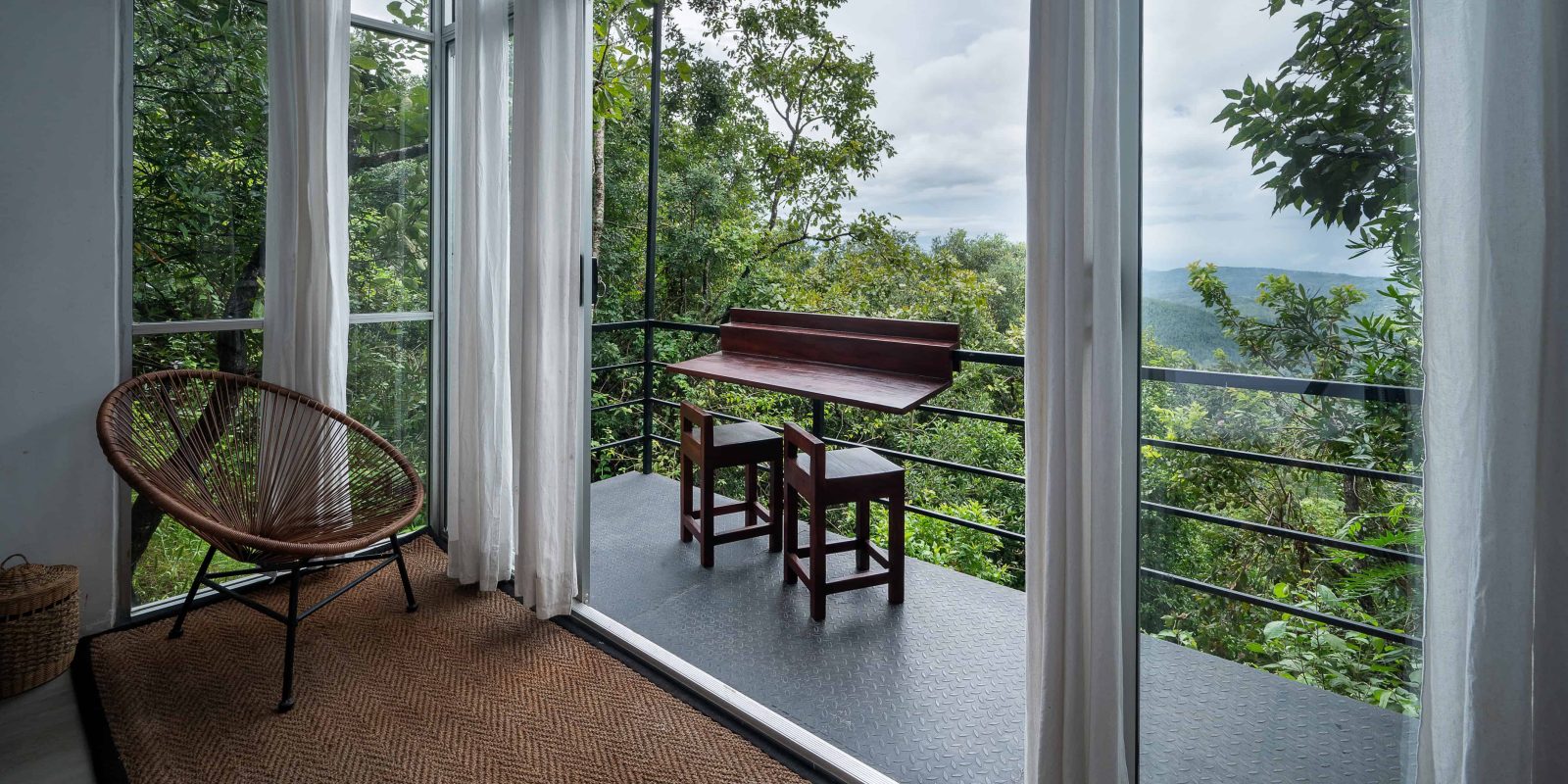
At Treehouse Chalets, resident naturalist-led Bird Walks are designed around this approach. Guests can explore the surrounding landscape with someone who understands the local birdlife and can help identify species, interpret behaviour and explain the wider ecology of the area.
That changes the experience considerably.
Instead of walking through a forest and wondering what you are hearing, you have someone who can help you understand it.
Why Bird Tourism Matters
Birdwatching is also more significant than simply being a recreational activity.
When travellers visit places because of their biodiversity, the natural landscape gains another form of value.
A forest is no longer valuable only for its timber or land.
A wetland is not simply unused land.
A bird-rich landscape becomes something people actively want to experience, understand and protect.
That can create a positive relationship between tourism and conservation.
But responsible bird tourism also requires restraint.
Birds should not be chased, disturbed or attracted through harmful practices simply to create a better photograph. The goal should be to observe wildlife without changing its behaviour.
The best sighting is one that happens naturally.
A Different Kind of Birding Destination
Belihuloya may not have the same international recognition as some of Sri Lanka’s established birding destinations.
That may actually be part of its appeal.
There is still a sense of discovery.
You are not simply following a predetermined wildlife route. You are entering a landscape where the next sighting may happen beside a stream, above the trees, along a forest path or somewhere within the gardens.
At Treehouse Chalets, birdwatching becomes part of a broader experience of the landscape. A bird walk can lead into a jungle hike, a naturalist conversation or simply a quieter appreciation of the surroundings.
And that is perhaps the real attraction of birding in Belihuloya.
You come looking for birds.
But you leave understanding the landscape a little better.